
"Costa Rica high altitude coffee"
700 article(s) found

A unique and strong description of the flavor and flavor of fine coffee beans in Diamond Hill Manor in Costa Rica
Country: Costa Rica; production area: central Valley Grade: SHB; treatment: yellow honey treatment altitude: 1300-1500m; Variety: Caturra, Catuai Flavor description CUPPING NOTES: honey, tropical fruit, maple syrup, cantaloupe Honey,Tropical Fruit,Maple Syrup,Melons Shepherd Boy Manor is located at the highest altitude in Costa Rica

A brief introduction to the origin, development, history and culture of Costa Rican Diamond Hill boutique coffee beans.
Because of the coffee industry, Costa Rica is a more advanced profession. Coffee farmers have a high status in Costa Rica. In 1897, citizens of the capital witnessed the completion of the National Theater donated by coffee tycoons. Coffee wealth brings stability to Costa Rica's politics, economy and democracy, which is rare in Central American countries. In addition, Colombia has laws that only allow the planting of Arabica and Drogba

Costa Rican Coffee Manor introduces the Goddess Manor Costa Rican Coffee producing area
Tarrazu in Costa Rica is one of the major coffee producing areas in the world. The coffee produced is light and pure in flavor and pleasant in aroma. Costa Rica, with its fertile volcanic soil and good drainage, is the first country in Central America to grow coffee and bananas for commercial value. Coffee and bananas are the country's main exports. In 1729, coffee was introduced from Cuba to Goth.

A brief introduction to the History and Culture of the Origin and Development of Fine Coffee beans in Diamond Hill Manor, Costa Rica
Excellent Costa Rican coffee is called extra hard beans, and this kind of coffee can grow at an altitude of more than 1500 meters. Altitude has always been a problem for coffee growers. The higher the altitude, the better the coffee beans, not only because the higher altitude can increase the acidity of the coffee beans and thus increase the flavor, but also because the night temperature at the higher altitude is lower, which can make the trees grow slowly.

Introduction of Coffee Variety characteristics and Grinding degree in Saint Roman Manor, Costa Rica
The topography of Costa Rica is that the coast is surrounded by plains, while the middle is cut off by rugged mountains. The country declared 200 nautical miles in its exclusive economic zone and 12 nautical miles in its territorial sea. The climate belongs to the tropics and subtropics, and some of them are new tropics. Population [edited this paragraph] 4.27 million (2007). The official language is Spanish. 95% of the residents believe in Catholicism. In Costa Rica, only

Pure flavor of Costa Rican Saint Roman boutique coffee beans cultivation geographical location climate altitude
There are many kinds of coffee here, but its industrial policy is large and cheap, so there is not much premium coffee, but it is a good choice for mixing other coffees. One of the most famous is Mountain Costa Rica Coffee, which tastes mellow and neutral. It can be boiled directly or mixed with other kinds of coffee beans to form a mixed coffee. It is also a good choice. Other kinds of Brazil
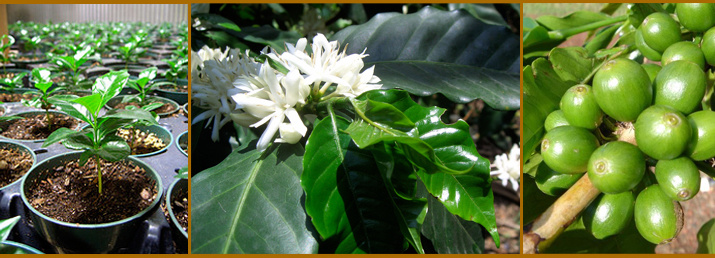
How about Costa Rican coffee? 53 global coffee producing areas introduce Costa Rican coffee brands
The coffee beans produced at the high latitudes of Costa Rica are famous in the world, full-bodied, mild in taste, but extremely sour. The coffee beans here have been carefully processed, which is why they have high quality coffee. Located in the south of SanJos, the capital of Tarasu, Costa Rica is one of the most valued coffee growers in the country. Tarasu in Costa Rica (

How to drink Costa Rica Vera Sachi coffee? Shangri-La Manor, Costa Rica
Professional coffee knowledge exchange More coffee bean information Please pay attention to coffee workshop (Weixin Official Accounts cafe_style) Costa Rica has seven coffee producing areas, among which Tarazhu, Central Valley and Western Valley are the three most famous and best quality producing areas. West Valley is one of the seven producing areas of Costa Rica, and Valle Occidental is the western mountain.

A brief introduction to the characteristics of coffee grindability and taste in Chateau Saint-Roman, Costa Rica
The research center, located about 30 kilometers northeast of San Jose, the capital of Costa Rica, belongs to the Costa Rican Coffee Association and is a research institution for coffee planting, breeding and quality inspection in Costa rica. in addition, it also has 10 hectares of experimental plots, planting a number of excellent varieties. Coffee is the main agricultural product of Costa Rica, with an annual output of more than 2 million bags (60 kg).

Description of Coffee Bean Flavor in Las Haas Manor, Costa Rica
The research center, about 30 kilometers northeast of San Jose, the capital of Costa Rica, belongs to the Costa Rican Coffee Association and is a research institution for villa sarchi planting, breeding and quality inspection newly developed by Costa Rica's national coffee breeds. in addition, it also has 10 hectares of experimental plots, planting a number of excellent varieties. Coffee is the main agricultural product in Costa Rica, with an annual output of more than 2 million bags.

Introduction to the quality characteristics of Coffee Flavor description treatment in Saint-Roman Manor, Costa Rica
Tarrazu in Costa Rica is one of the major coffee producing areas in the world. The coffee produced is light and pure in flavor and pleasant in aroma. Costa Rica, with its fertile volcanic soil and good drainage, is the first country in Central America to grow coffee and bananas for commercial value. Coffee and bananas are the country's main exports. In 1729, coffee was introduced from Cuba to Goth.

A brief introduction to the description of flavor and aroma characteristics of Costa Rican Saint Roman coffee beans with pure flavor
Costa Rica's coffee industry, originally controlled by the Costa Rican Coffee Industry Company (InstitutodelCafdeCostaRica, ICAFE), has been taken over by the official Coffee Committee (OficinadelCaf). Among the exported coffee, those products that are considered to be of substandard quality are colored with blue vegetable dyes and then transferred back to China for sale. Coffee consumed at home

Introduction to the Flavor description of Costa Rica Coffee Bean by Variety treatment
Excellent Costa Rican coffee is called extra hard beans, and this kind of coffee can grow at an altitude of more than 1500 meters. Altitude has always been a problem for coffee growers. The higher the altitude, the better the coffee beans, not only because the higher altitude can increase the acidity of the coffee beans and thus increase the flavor, but also because the night temperature at the higher altitude is lower, which can make the trees grow slowly.

A brief introduction to the origin, development, history and culture of Costa Rican Diamond Hill boutique coffee beans with unique flavor.
Because of the coffee industry, Costa Rica is a more advanced profession. Coffee farmers have a high status in Costa Rica. In 1897, citizens of the capital witnessed the completion of the National Theater donated by coffee tycoons. Coffee wealth brings stability to Costa Rica's politics, economy and democracy, which is rare in Central American countries. In addition, Colombia has laws that only allow the planting of Arabica and Drogba

A brief introduction to the description of the flavor and flavor characteristics of coffee beans in the Goddess Manor with good sweetness.
Costa Rican coffee is produced in the Republic of Costa Rica (The Republic of Coffee) in the south of Central America. Its quality is similar to that of Colombian coffee and is suitable for blending mixed coffee. Costa Rican coffee has full particles, ideal acidity and unique strong flavor. High-quality Costa Rican coffee is called extra hard beans, and this kind of coffee can grow at an altitude of more than 1500 meters.

Costa Rican coffee-quality origin
Tarrazu in Costa Rica is one of the major coffee producing areas in the world. The coffee produced is light and pure in flavor and pleasant in aroma. Costa Rica, with its fertile volcanic soil and good drainage, is the first country in Central America to grow coffee and bananas for commercial value. Coffee and bananas are the country's main exports. In 1729, coffee was introduced from Cuba to Goth.

An introduction to the characteristics of Coffee producing area in Costa Rica
Costa Rican coffee origin: high-quality Costa Rican coffee is called extra hard beans, this kind of coffee can grow at an altitude of more than 1500 meters. Altitude has always been a problem for coffee growers. The higher the altitude, the better the coffee beans, not only because the higher altitude can increase the acidity of the coffee beans and thus increase the flavor, but also because the night temperature at the higher altitude is lower.

La Minita Farm in Costa Rica Coffee region
In Costa Rica, coffee fruit Tarasu is unloaded from ox carts in the south of the country's capital, SanJos, and is one of the country's most valued coffee growers. LaMinitaTarrazu coffee is a famous local product, but its production is limited, about 72600 kilograms a year. It is grown on a piece of land called LaMinita.

A brief introduction to the origin, development, history and culture of Tarazhu boutique coffee beans in Costa Rica
Excellent Costa Rican coffee is called extra hard beans, and this kind of coffee can grow at an altitude of more than 1500 meters. Altitude has always been a problem for coffee growers. The higher the altitude, the better the coffee beans, not only because the higher altitude can increase the acidity of the coffee beans and thus increase the flavor, but also because the night temperature at the higher altitude is lower, which can make the trees grow slowly.

A brief introduction to the unique flavor and flavor characteristics of Costa Rican Saint Roman boutique coffee beans
One of the most famous is Mountain Costa Rica Coffee, which tastes mellow and neutral. It can be boiled directly or mixed with other kinds of coffee beans to form a mixed coffee. It is also a good choice. Other kinds of Brazilian coffee, such as Rio and Parana, can be produced in large quantities because they do not need too much care. Although they taste rough, they can be regarded as a kind of coffee with good quality and low price.